
Dual Color Reflex Arcade
About
Dual Color Reflex Arcade succeeds by removing everything that is not the core decision. One ball, two colors, one input, and a run that ends on the first mistake. The increasing speed turns a simple rule into a real test of hand-eye coordination, and the minimal black-and-white presentation keeps color recognition instant. It suits players who enjoy short, score-chasing sessions and are comfortable with a game that offers no progression beyond their own best run.
Matching Colors Under Pressure
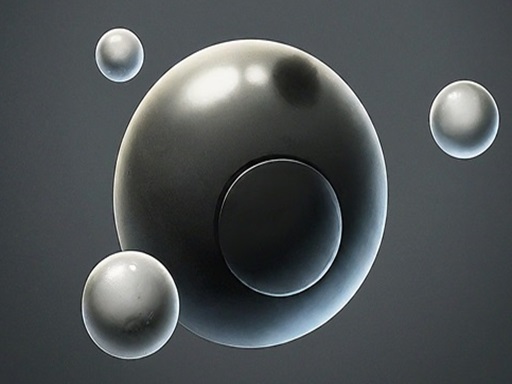
Dual Color Reflex Arcade reduces the arcade formula to a single decision repeated at speed: your ball is either black or white, and incoming balls arrive in one of those two colors from both sides of the screen. A tap or click flips your ball. Match the incoming color and you score a point; mismatch it and the run is over. There is no health bar, no second chance, and no ambiguity about what went wrong.
One Input, Two Outcomes
Because the only control is a color toggle, every moment of play asks the same question: is my ball the right color for what is approaching? Early on, the pace is forgiving enough to read each ball individually. As the game accelerates, balls arrive faster and from both directions, so you are constantly re-evaluating which side to watch and when to flip. The binary state of the ball means a mistake is never a matter of degree — it is either matched or not.
Why the Black-and-White Look Works
The visual design strips away everything except the two colors that matter. No gradients, no decorative backgrounds, no UI clutter competing for attention. That restraint is functional rather than stylistic: color identification has to be instant, because reaction time is the entire skill ceiling. A player who hesitates for a fraction of a second at high speed will flip too late.
Endless Runs, Rising Speed
There are no levels to unlock or stages to clear. The game is structured as an endless run that becomes progressively faster, so the challenge is self-imposed: how long can you keep matching before the pace outruns your reflexes? This makes it suited to short sessions, but the increasing speed also rewards longer play as you build muscle memory for the flip timing.
Compatibility
FAQ
Comments
Sign in to comment
You must be logged in before posting a review or rating.
No comments yet. Be the first to comment!







Editorial Notes