
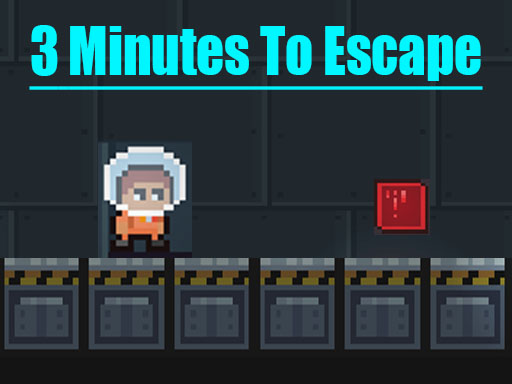
3 Minute Escape Room Puzzle
About
3 Minute Escape Room Puzzle delivers a straightforward premise: solve each room before the clock runs out. Its strength lies in how the timer changes player behavior, forcing prioritization over exhaustive searching. The saved best times add replay incentive, and the family-friendly design keeps the experience accessible. The main limitation is that the game offers no hint system, so stuck players must rely on persistence and pattern recognition. It suits casual players and puzzle fans who value deduction over speed alone.
How the Timer Shapes Every Decision
The three-minute limit is not a background detail; it dictates how you play. You cannot exhaustively examine every object or test every combination. The clock forces you to prioritize: scan the room, identify the most promising clues, and commit to a line of reasoning before second-guessing yourself. This pressure distinguishes the game from untimed hidden-object titles, where patience alone usually carries you through. Here, patience must be paired with decisive action. The timer starts immediately when a level begins, so the first few seconds matter as much as the last.
Solving Rooms With Logic, Not Speed Alone
Each room contains hidden objects, patterns, and riddles that connect to form an escape route. You click or tap items to examine them, and some objects must be combined to progress. The game rewards logical deduction over frantic clicking. If a key does not fit a lock, the problem is usually that you have not yet found the object it does fit. Revisiting areas you dismissed early often reveals overlooked details. Because every room uses a different puzzle structure, you cannot rely on a single learned routine; flexibility matters more than memorization.
Progression and Replay Value
The game saves your best completion time for each level, which gives failed attempts a purpose beyond simply finishing. A room you escaped in two minutes and fifty seconds becomes a target to beat. This design encourages repeated runs, and repetition gradually trains your eye to recognize common puzzle patterns faster. Difficulty escalates as you progress, but the underlying mechanics stay consistent, so new rooms add complexity rather than new control schemes. The clean visuals and intuitive interface keep attention on the puzzles instead of the menus.
Who This Game Suits
Casual players can enjoy the straightforward point-and-click interaction, while puzzle enthusiasts get a genuine test of deduction under constraint. The family-friendly design contains no violence or mature themes. Since the game works on both desktop and mobile devices and does not interrupt play with ads, it fits short breaks as easily as longer sessions. Success depends on calm observation and creative thinking, not reflexes.
Compatibility
FAQ
Comments
Sign in to comment
You must be logged in before posting a review or rating.
No comments yet. Be the first to comment!





Editorial Notes