
Floral Garden Solitaire Puzzle
About
Floral Garden Solitaire Puzzle delivers a quiet, methodical card experience. The six-column layout and suit-agnostic stacking add a small twist to familiar solitaire rules, while automatic ace placement smooths the opening moves. Its strengths are accessibility and a relaxed pace; there are no timers, scores, or complex mechanics. The main limitation is that it offers little challenge for players seeking speed or competitive depth. It suits anyone who wants a low-pressure puzzle for short breaks or longer unwinding sessions.
Building Foundations in a Floral Setting
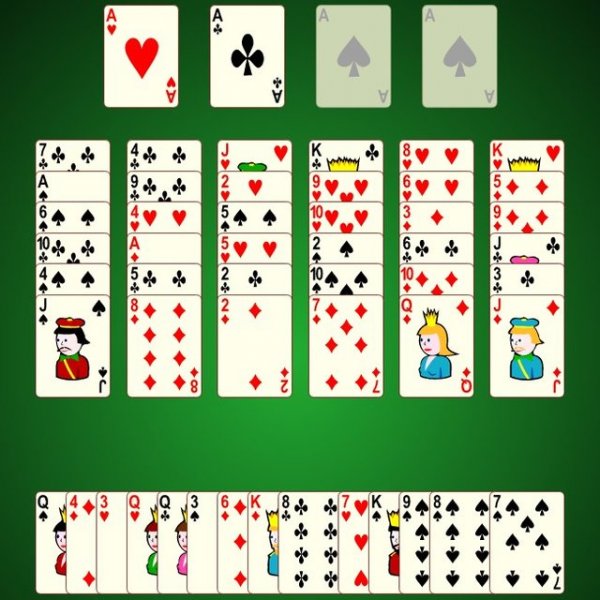
Floral Garden Solitaire Puzzle is a single-player card game that uses a standard 52-card deck. The objective is straightforward: move every card to four foundation piles, each built in ascending order from ace to king within the same suit. Aces are placed automatically onto foundations when they appear, which gives players a head start on building sequences. The floral theme and uncluttered layout keep the screen easy to read during longer sessions, and the absence of timers or scoring means the pace is entirely up to the player.
How Cards Move Between Columns
Play begins with six columns of face-up cards. Only the top card of each column can be moved. To relocate a card, drag it onto another column where the target card is one rank lower, regardless of suit. Cards can also be placed directly onto a foundation if they are the next in ascending order for that suit. Only one card may be moved at a time; groups cannot be relocated together. As cards leave the columns, the layout becomes more restrictive, so thinking ahead matters more than speed.
Controls and Accessibility
The drag-and-drop controls work on computers, tablets, and phones, and a full-screen mode is available for a more focused view. Because the game uses a familiar deck and simple rules, anyone who has played basic solitaire will recognize the structure quickly. There are no hidden elements or complex mechanics, which keeps the experience centered on planning and patience rather than competition.
Approaching Each Round
Uncovering aces early is useful because they start the foundation piles. Moving cards from shorter columns can prevent blocking other moves, and it is worth hesitating before placing a card on a foundation if it could still serve as a building block in the columns. With no time limit, each decision can be weighed carefully, and regular play helps in recognizing patterns several moves ahead.
Compatibility
FAQ
Comments
Sign in to comment
You must be logged in before posting a review or rating.
No comments yet. Be the first to comment!









Editorial Notes