
Crescent Solitaire Card Puzzle
About
Crescent Solitaire Card Puzzle stands out by replacing columns with a crescent of overlapping piles. The pairing-to-13 rule is easy to grasp, but deciding which exposed cards to remove first gives the game real strategic texture. Shuffled decks keep sessions varied, and the online, no-download format lowers the barrier to entry. The main limitation is that the input does not confirm extras like undo or mobile controls, so players should expect a straightforward card puzzle rather than a feature-rich package.
The Crescent Layout and Objective
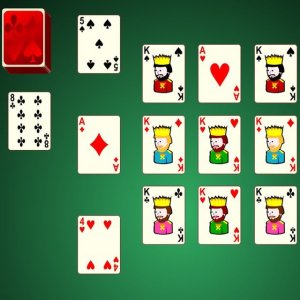
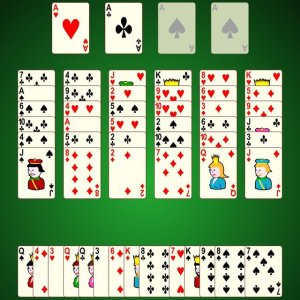
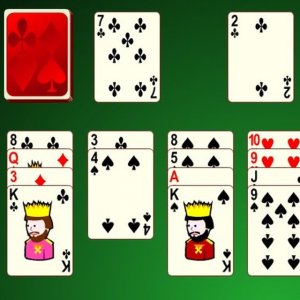
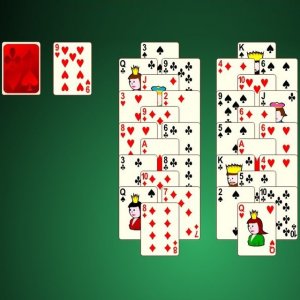
Crescent Solitaire Card Puzzle uses a standard 52-card deck, but the deal is not the familiar tableau. Cards are arranged into overlapping piles that form a crescent shape. Your objective is to remove every card from this crescent by pairing exposed cards whose values add up to 13. A card counts as exposed only when no other card covers it. This spatial constraint is the main difference from standard solitaire, where you often work down columns. Here, the shape of the crescent determines which cards are available at any moment.
Pairing Rules and Foundations
Valid pairs include any two exposed cards that sum to 13: a 7 with a 6, a King with a 2, an Ace with a Queen, and so on. Select one card, then the other, and the pair is removed. After each removal, previously covered cards may become exposed, opening new pairing options. Meanwhile, foundation piles in the center are built in ascending order by suit, from Ace to King. You can move cards to the foundations when the sequence allows. The game ends when all cards reach the foundations or no valid pairs remain.
Decision-Making Under a Shuffled Deck
Every session begins with a shuffled deck, so the crescent arrangement changes each time. That randomness means you cannot memorize a fixed solution. Instead, you read the current layout and decide which pairs to remove first. Removing a pair that frees several buried cards is usually stronger than removing one that exposes nothing new. Because the deck is shuffled, some deals are more open than others, and the game rewards patience over speed.
Accessibility and Replay
The rules are simple enough for newcomers: find two exposed cards that total 13, remove them, and watch for newly revealed cards. Experienced solitaire players will still find depth in planning removal order and tracking foundation progress. The game is available online for free with no download required, and it is designed to be family-friendly. Each shuffled deal provides a fresh puzzle, which supports repeated play without identical setups.
Compatibility
FAQ
Comments
Sign in to comment
You must be logged in before posting a review or rating.
No comments yet. Be the first to comment!


Editorial Notes