
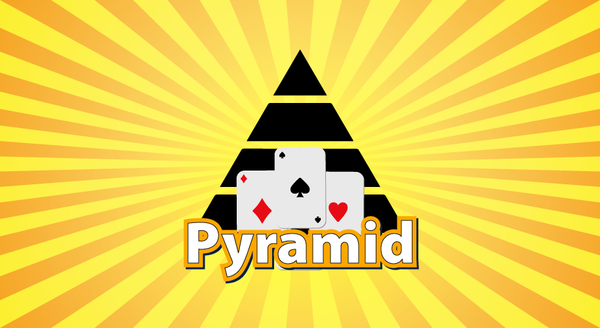
Pyramid Solitaire Card Challenge
About
Pyramid Solitaire Card Challenge takes a familiar card puzzle and strips it to the essentials: a 28-card pyramid, a 13-sum pairing rule, and a draw pile. The lack of a timer and the clean interface suit players who want a quiet mental break rather than a race. The main limitation is the random deal — some layouts are simply harder — but that variability is also what keeps each session distinct. It is a good fit for casual card players and anyone who enjoys low-pressure strategy.
The Pyramid Layout
Pyramid Solitaire Card Challenge deals 28 cards from a standard 52-card deck into a seven-row pyramid: seven cards at the base, then six, five, four, three, two, and one at the top. The remaining cards form a draw pile, and the top card is turned face up to start a discard pile. The objective is to remove every card from the pyramid by pairing cards whose values total 13. Kings, valued at 13, are removed on their own. Because lower rows overlap upper ones, a card cannot be selected until the cards covering it are gone, so the pyramid's structure dictates which moves are available at any moment.
Pairing and Drawing Decisions
Each turn, you look for two exposed cards that add up to 13 — a 10 with a 3, a Queen with an Ace, and so on — and remove them together. A lone King can be cleared immediately. When no pair is available among the exposed pyramid cards, you draw from the discard pile to reveal a new card. The discard pile also serves as a source for pairing: an exposed pyramid card can be matched with the top discard card. Deciding when to draw and which pairs to remove first shapes the rest of the game, because every removal changes which cards become accessible. The rules are simple, but the consequences of each choice are not always obvious.
Luck, Skill, and Pace
Pyramid Solitaire is often described as a balance of luck and skill. The initial deal is random, so some layouts are harder than others, but careful sequencing can rescue many boards that look stuck. There is no timer and no penalty for thinking, which makes the game suitable for short breaks or longer, focused sessions. The interface is kept clean to minimize distractions, and the game runs in a browser without downloads. Players who enjoy forward planning, pattern spotting, and a calm pace will find the format familiar, while newcomers can learn the 13-sum rule in a single round.
Compatibility
FAQ
Comments
Sign in to comment
You must be logged in before posting a review or rating.
No comments yet. Be the first to comment!








Editorial Notes