
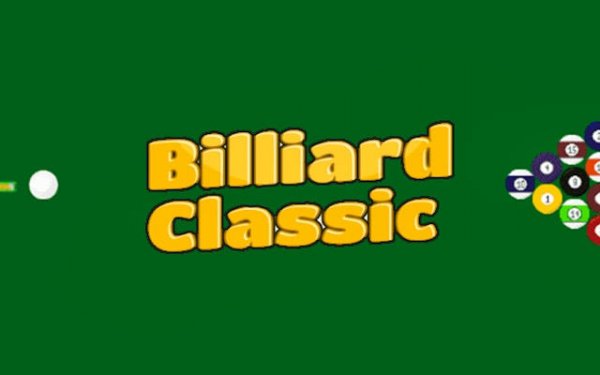
Precision Pocket Billiards Challenge
About
Precision Pocket Billiards Challenge delivers a faithful 8-ball pool experience built around realistic ball physics and standard rules. The minimal interface keeps attention on the table, while optional aiming aids help newcomers without alienating veterans. Its strength lies in rewarding careful positioning and spin control over brute force. Players seeking a pure, no-frills billiards simulation will find it well-suited. The main limitation is the lack of stated multiplayer or difficulty options, which may reduce long-term variety for some.
Authentic 8-Ball Rules and Match Flow
Precision Pocket Billiards Challenge follows standard 8-ball rules. After the break, one player is assigned solids and the other stripes. The objective is to pocket every ball in your group, then legally sink the 8-ball. Fouls such as pocketing the cue ball or hitting an opponent's ball first hand the other player an advantage. This turn-based structure creates a back-and-forth rhythm where each shot matters.
Physics That Reward Finesse
The simulation engine calculates ball collisions, friction, and momentum using real-world principles. Energy transfer between the cue ball and object balls means slight changes in aim or power produce very different outcomes. A gentle tap often works better than a forceful strike, especially when you need to position the cue ball for your next shot. Understanding how spin and power affect ball paths is central to improvement.
Controls and Aiming Assistance
Whether you play with a mouse or on a touchscreen, the controls are intuitive. You drag from the cue ball to set your aim, pull back to adjust power, then release to shoot. A trajectory line can appear to help visualize the cue ball's path, which assists newcomers while still letting experienced players rely on their own instincts. The interface stays clean, showing only the table and essential controls.
Minimal Presentation, Maximum Focus
The visual design is deliberately minimal. The table dominates the screen with clear markings and realistic cloth texture. Balls are brightly colored and easy to distinguish. No distracting animations or cluttered menus pull your attention away. This approach keeps each match feeling like a focused practice session at a real table.
Building Skill Through Repetition
Improvement comes from playing regularly and observing how the cue ball reacts after contact. Experiment with different amounts of spin and power to see how they change ball paths. Over time, you learn to plan two or three shots ahead, setting up favorable positions rather than just pocketing the immediate ball. This shift from reactive shooting to strategic planning is the core of long-term progress.
Compatibility
FAQ
Comments
Sign in to comment
You must be logged in before posting a review or rating.
No comments yet. Be the first to comment!




Editorial Notes