
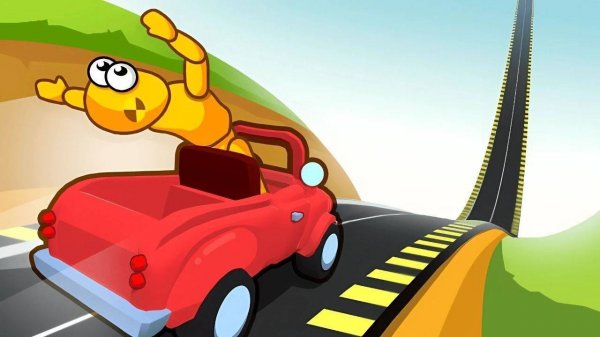
Gravity Ramp Vehicle Experiment
About
Gravity Ramp Vehicle Experiment succeeds as an informal physics tool because it removes everything that usually distracts from observation: no timers, no scores, no fail states. The abandoned town becomes a lab where vehicle weight, ramp angle, and surface friction produce readable results. Its cartoonish style and simple controls make it approachable for young players, though anyone seeking structured progression or competitive driving will find the experience too open-ended. The value depends entirely on whether you enjoy asking 'what if' and watching the answer play out.
What You Actually Do
Gravity Ramp Vehicle Experiment drops you into an abandoned town with a vehicle and no objectives. You drive, steer, and collide with objects to see what happens. The core loop is simple: pick a vehicle, pick a starting point, and test how it responds to ramps, barriers, and uneven surfaces. Every run is a small experiment, and the environment provides immediate feedback based on realistic physics.
Vehicle Differences That Matter
Each vehicle handles differently. Heavier models feel stable but resist quick direction changes; lighter ones respond faster to steering but lose traction more easily. The simulation models weight transfer, suspension, and surface friction, so the gap between a nimble car and a sturdy truck is something you feel rather than read about. Switching vehicles changes how you approach the same ramp or obstacle, which makes comparison a natural part of play.
The Town as a Testing Ground
The abandoned town is built for interaction, not decoration. Ramps launch vehicles, barriers break on impact, and stacked objects topple when hit. These reactions are not scripted; they emerge from the physics engine. Hitting a structure at an angle produces a different result than a direct hit, and weak floors can give way under enough weight. You can also exit a moving vehicle mid-run to create unusual outcomes, adding a layer of timing and creativity to each attempt.
Who It Suits
Controls are simple enough for young players, and the cartoonish visual style keeps crashes lighthearted. There is no violence, no timer, and no fail state. Sessions can last two minutes or an hour. The open-ended design rewards curiosity over skill, making it a practical choice for parents or teachers who want a low-pressure way to show how mass, speed, and friction interact. Players who prefer clear goals or structured progression will find less to hold onto here.
Compatibility
FAQ
Comments
Sign in to comment
You must be logged in before posting a review or rating.
No comments yet. Be the first to comment!



Editorial Notes