
Stealth Command: Tactical Pursuit
About
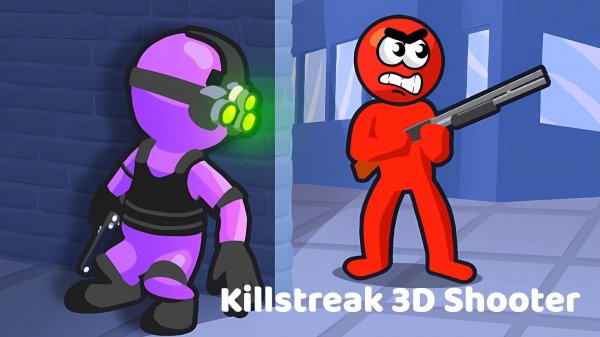
Stealth Command: Tactical Pursuit stands out for its emphasis on player-driven solutions. The physics engine turns everyday objects into tools, and missions avoid fixed patterns, so replaying feels fresh. The stickman visual style keeps information readable during tense moments. Later vehicle sections and mechanical bosses add variety, though they shift away from pure stealth. It suits players who enjoy planning, experimentation, and adapting on the fly rather than memorizing routes.
Reading the Field
Stealth Command: Tactical Pursuit asks players to observe before acting. Enemy patrol routes, environmental cues, and interactive objects form a puzzle that changes as guards move. Charging in rarely works; instead, you study patterns, find weak points, and time your movements. The physics engine lets you knock over, stack, or trigger objects in chain reactions to distract or disable opponents. A well-placed push can open a route, and collapsing a structure can block a path. The game avoids fixed memorization, pushing players to think on their feet as situations shift.
Mission Variety and Escalation
Missions are built to feel distinct. Some require infiltrating a guarded facility to retrieve an item; others have you navigate interconnected rooms full of patrolling enemies. Later stages add vehicle sections where you pursue or evade targets at speed, breaking the stealth rhythm and testing reflexes. Final challenges pit you against large mechanical units such as armored vehicles and aerial drones, demanding a mix of stealth, puzzle-solving, and precise timing. Each mission builds on skills from earlier ones, creating a steady progression curve without falling into repetition.
Clarity in Motion
The visual style uses stickman characters and clean 3D environments. This makes cover points, interactive objects, and enemy positions easy to read during fast moments. Color palettes shift between missions, from dim industrial complexes to bright outdoor areas, helping each setting feel distinct. Sound design supports the visuals with subtle audio cues that signal nearby patrols or environmental changes, keeping you focused on tactical decisions without distraction.
Player-Driven Solutions
There is rarely one correct way to finish an objective. You might disable a guard with a distraction or find a route that avoids detection entirely. The physics system rewards creative thinking: stacking boxes to reach a ledge, rolling a barrel to make noise in a distant corridor. This flexibility makes replaying a mission feel fresh as you try different strategies. Failure is not punished harshly; the design encourages learning from mistakes and refining your approach, which keeps the game accessible for newcomers while offering depth for tactical veterans.
Compatibility
FAQ
Comments
Sign in to comment
You must be logged in before posting a review or rating.
No comments yet. Be the first to comment!






Editorial Notes