
Spider Solitaire Classic Card Puzzle
About
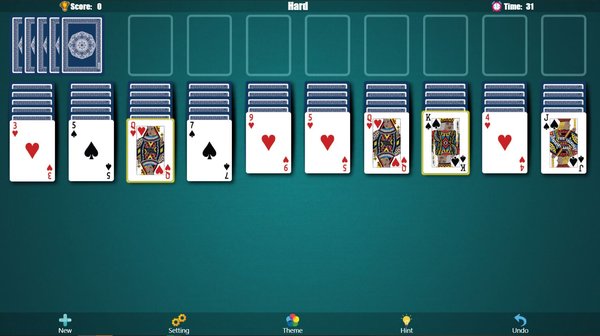
Spider Solitaire Classic Card Puzzle offers a focused version of the classic two-deck game. The rules are standard: build eight foundation piles from King to Ace using ten tableau piles and a stock pile. Its strength lies in the lack of time constraints and the clean interface, which lets players concentrate on sequencing decisions. The main limitation is that the input does not describe additional modes, difficulty settings, or multiplayer features, so it appears to be a straightforward single-player adaptation. It suits players who enjoy logic puzzles and patience games.
Two-Deck Solitaire Structure
Spider Solitaire Classic Card Puzzle uses two full decks of 52 cards. Cards begin in ten tableau piles, and only the top card of each pile is visible. The objective is to assemble eight foundation piles, each representing a suit, ordered from King down to Ace. Because two decks are in play, the same rank and suit appear twice, which changes how sequences form and how often matching opportunities appear.
Tableau Movement and Stock Pile
During play, you move cards between tableau piles. A card can be placed on another card that is one rank higher, regardless of suit. Descending sequences can be moved together as a group. When a tableau pile is empty, any King or a stack beginning with a King can be placed there. If no moves remain, you deal one new card from the stock pile to each tableau pile. The game continues until all eight foundation piles are complete.
Reading the Tableau
Success depends on recognizing which cards are buried and which sequences can be relocated without blocking future moves. Uncovering face-down cards early expands your options, and creating empty tableau columns gives you more flexibility because a King can be placed there. Moving cards without a clear purpose can reduce the number of legal moves later, so it helps to consider how each move affects the remaining stock deals.
Patience and Pattern Recognition
The game blends logical thinking with patience. There are no time constraints, so you can proceed at your own pace. Regular practice helps you spot patterns and plan sequences ahead. Because each deal produces a different arrangement, the puzzle changes from session to session, and the same strategic habits apply across games.
Compatibility
FAQ
Comments
Sign in to comment
You must be logged in before posting a review or rating.
No comments yet. Be the first to comment!





Editorial Notes